Living Here
A plain-language guide to the systems and routines that come with an acreage property, with questions to ask about 7450 Johnston Road.
General ownership information. Property-specific records and professional advice should inform your decisions.
Well water
A private well draws groundwater from beneath the land and pumps it to the house. The owner looks after the well and the quality of its water.
Groundwater collects in the spaces between soil and rock. A well is a lined hole that reaches it. A pump lifts the water into the home's plumbing, usually through a pressure tank that keeps the flow steady.
With a private well, no water utility tests the water for you. EPA recommends testing every year for total coliform bacteria, nitrates, total dissolved solids, and pH, and testing again after repairs or if the water's taste, smell, or color changes.
This explains how wells generally work. It does not describe this property's equipment, records, or water output.
- Rain and snowmelt soak into the ground and collect as groundwater in soil and rock.
- A lined, capped well reaches down into the groundwater.
- A pump in or above the well lifts water up through a pipe.
- A pressure tank stores some water and keeps pressure steady.
- Water flows into the home's plumbing.
What owners typically manage
- Yearly water testing through a certified laboratory.
- Keeping the ground around the wellhead clear and sloped so surface water drains away.
- Checking the well cap and casing for cracks or damage.
- Keeping records of tests, repairs, and service visits.
- Using licensed professionals for any work on the well.
Questions to ask about this property
- What water records and recent test results are available?
- Who has serviced the well and pump?
- Is any water treatment installed?
- How is the water supply affected if the power goes out?
Sources: EPA: Protect Your Home's Water (opens in a new tab). Reviewed October 14, 2026.
Septic systems
An onsite septic system treats household wastewater on the property. Solids settle in a tank, and the liquid moves on to a drainfield, where the soil finishes the job.
Wastewater from the house flows into a buried, watertight tank. Heavier solids sink to the bottom as sludge. Grease and oils float to the top as scum. The liquid in between, called effluent, flows out to the drainfield.
The drainfield, also called a leach field, is a shallow, covered area of perforated pipe in the soil. Effluent spreads through it and filters down through the soil, which removes many bacteria, viruses, and nutrients before the water reaches groundwater.
A drainfield does not replace pumping. Sludge and scum build up in the tank over time. EPA says household systems should be inspected at least every three years, and tanks are typically pumped every three to five years. The right interval depends on household size, water use, and the system itself.
- Wastewater leaves the house through one main drain pipe.
- In a buried, watertight tank, solids sink to the bottom as sludge and grease floats to the top as scum.
- The liquid in the middle, called effluent, flows out to the drainfield.
- In the drainfield (leach field), perforated pipes spread the effluent into the soil.
- The soil filters and treats the effluent as it moves down toward groundwater.
What owners typically manage
- Inspections and pumping by a licensed septic professional.
- Keeping grease, wipes, and other non-flushable items out of drains.
- Spreading water-heavy chores, like laundry, across the week.
- Keeping vehicles off the drainfield and planting only grass over it.
- Directing roof drains and runoff away from the drainfield.
Questions to ask about this property
- What type of system is it, and what records are available?
- When was it last inspected or pumped?
- Where is the drainfield documented?
- What pumping interval would a septic professional recommend for your household?
Sources: EPA: How Septic Systems Work (opens in a new tab); EPA: How to Care for Your Septic System (opens in a new tab). Reviewed October 14, 2026.
Utilities and connectivity
Country properties often combine public utilities with systems the owner runs on site. Knowing which is which makes budgeting easier.
In town, water and sewer usually arrive as monthly bills. With a well and a septic system, the owner takes on those systems directly. That can replace some service charges, but it adds equipment, testing, and maintenance that need their own place in the budget.
Use these categories to organize your questions. The team can help you find out how each one works at this property.
- Electricity
- Water
- Wastewater
- Heating fuel
- Internet
- Trash and recycling
- Road and access
Planning considerations
- Budget for testing, servicing, and eventual replacement of onsite equipment.
- Keep providers, account numbers, and service records in one place.
- Plan for power interruptions, since a well pump runs on electricity.
Questions to ask about this property
- Which provider supplies electricity, and what have recent bills looked like?
- How is the home heated, and with what fuel?
- Which internet options reach the property?
- How is trash collected?
- Are there any shared road or community costs?
Land and buildings
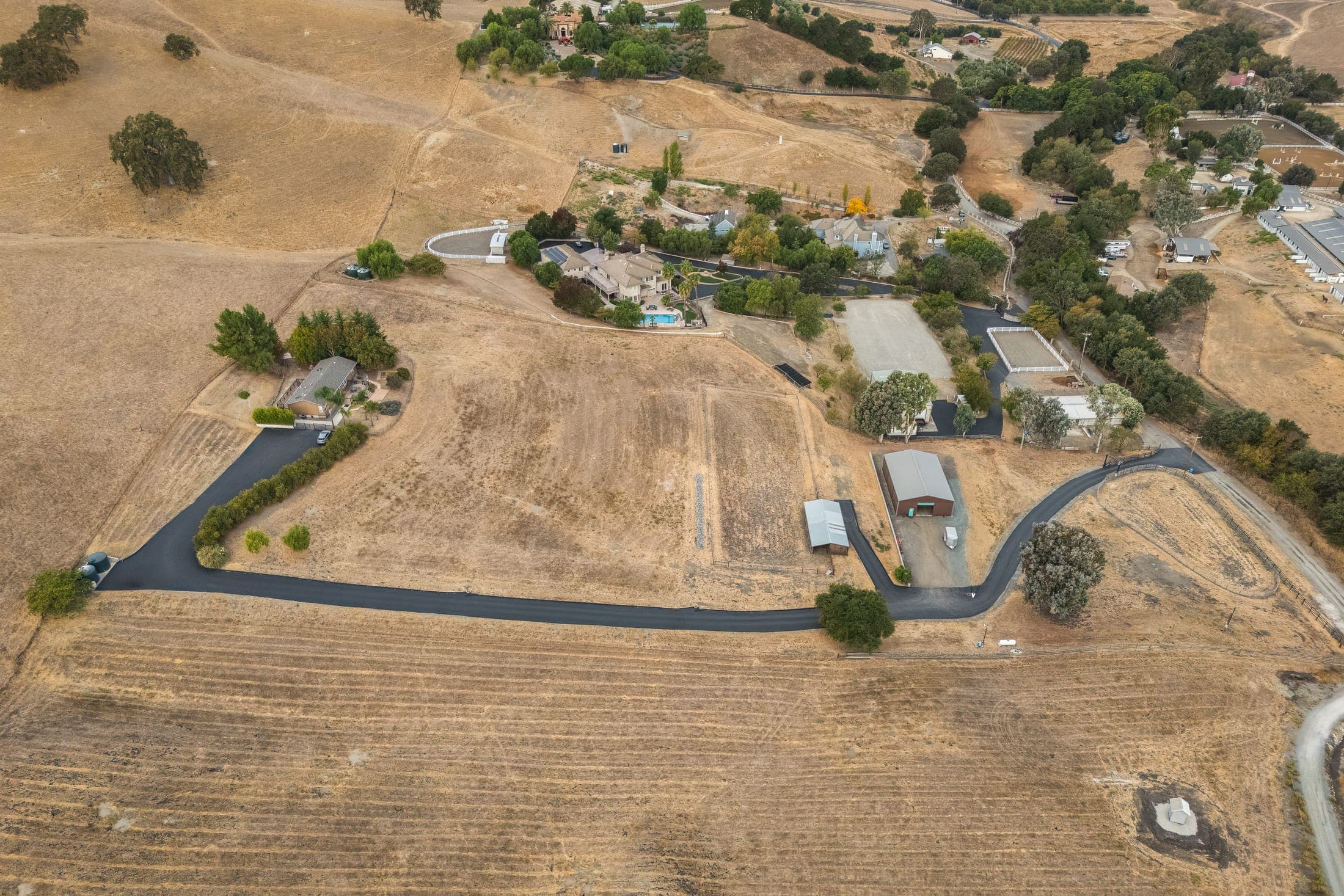
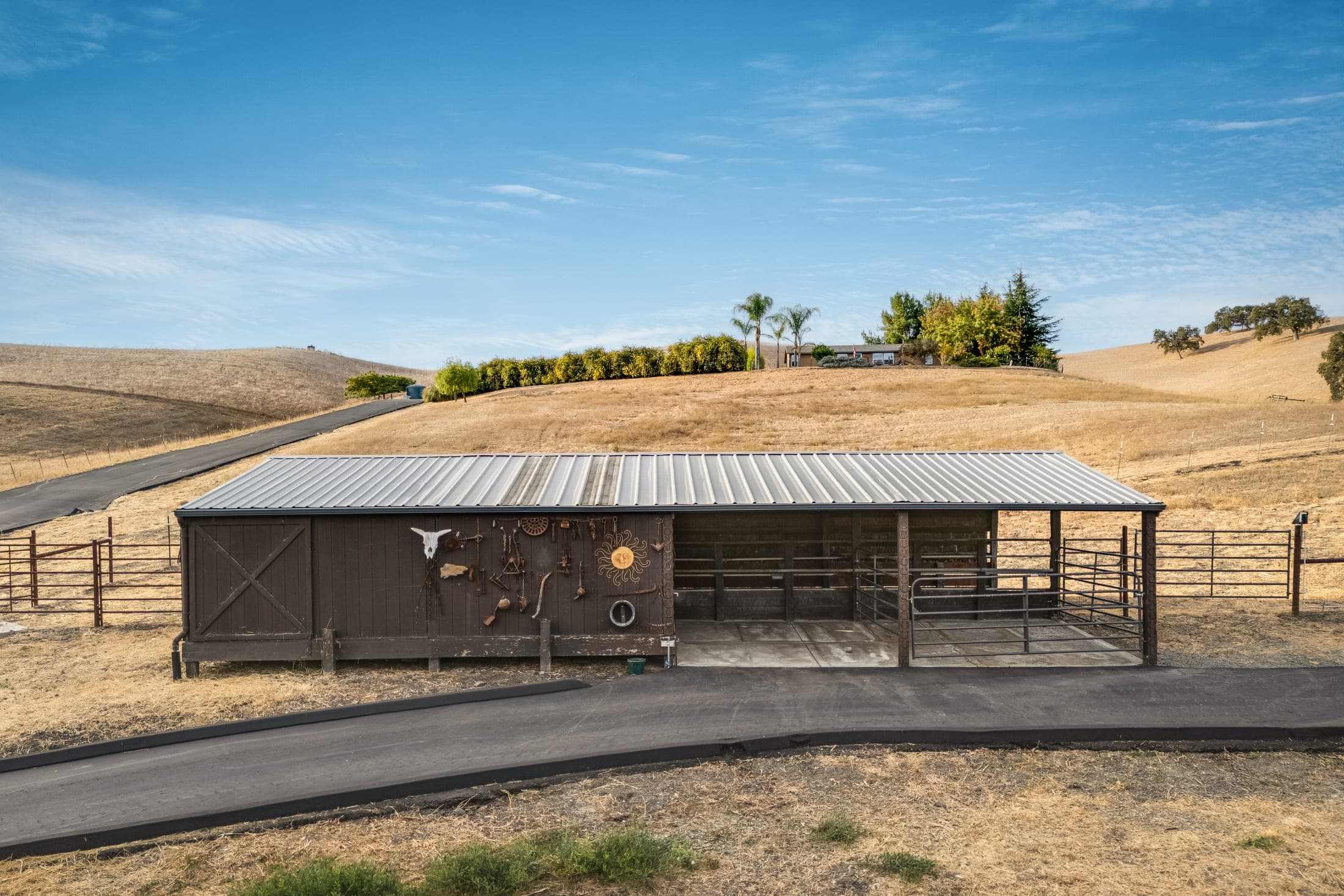
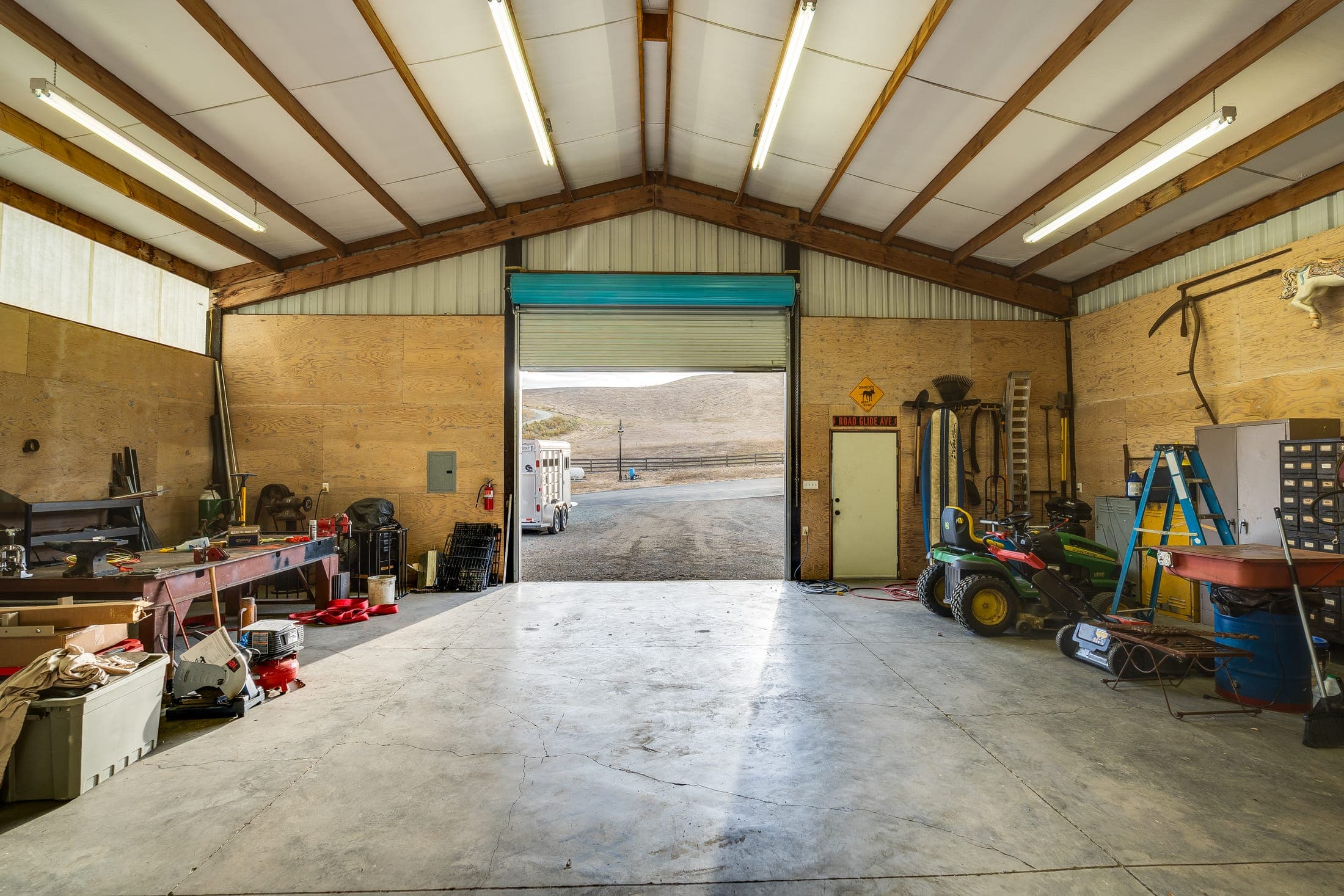
Pasture, fences, the drive, and the outbuildings all need routine attention. A seasonal checklist keeps it manageable.
These are the categories most acreage owners plan for. It is planning guidance, not the seller's maintenance schedule, and this property's upkeep is worth discussing with the team.
A planning checklist
- Grounds: mowing or grazing, weed control, and clearing dry vegetation around buildings.
- Fences and gates: walking the fence lines and repairing posts, rails, and latches.
- Drive and access: keeping the drive clear and watching for erosion.
- Drainage: clearing culverts and ditches before the rainy season.
- Barn: checking the roof, stall, and water, and keeping the tack room dry.
- Shop: checking the roll-up doors, roof, and electrical.
Questions to ask about this property
- What routine care has the property needed?
- Which fences, gates, or structures have been repaired recently?
- How is the gravity-flow pasture water maintained?
- What records are available for the outbuildings?
Community and professionals
Owning acreage is easier with the right people to call. Ask the team about service resources and introductions.
Most acreage owners keep a short list of professionals for the property's systems and grounds. Ann Marie and Jim can talk with you about which resources are available for this property, and about introductions to neighbors.
- Well and pump service
- Septic service
- Plumbing
- Grounds and land care
- Fencing
- General building maintenance
Good habits
- Build your list of providers before you need one.
- Keep service records with the property documents.
Questions to ask the team
- Which service providers have worked on the property?
- Can you introduce me to resources for the well, septic, and grounds?
Getting started
A short list to bring to a showing or to your agent.
Ann Marie and Jim can help you find out what is available for each item.
Discussion checklist
- Available reports and disclosures
- Well and septic records
- Utility arrangements and providers
- Property access and the drive
- Routine upkeep for the land and buildings
- Service-provider resources
- How you plan to use the shop and the land
Questions to ask yourself
- How do you want to use the shop, the barn, and the pasture?
- Which tasks will you handle yourself, and which will you hire out?
Questions about this property?
Ann Marie and Jim can help with records, showings, and introductions.
Ann Marie Nugent
Listing agent · DRE #01230832
Jim Walberg
Listing agent · DRE #01119801